
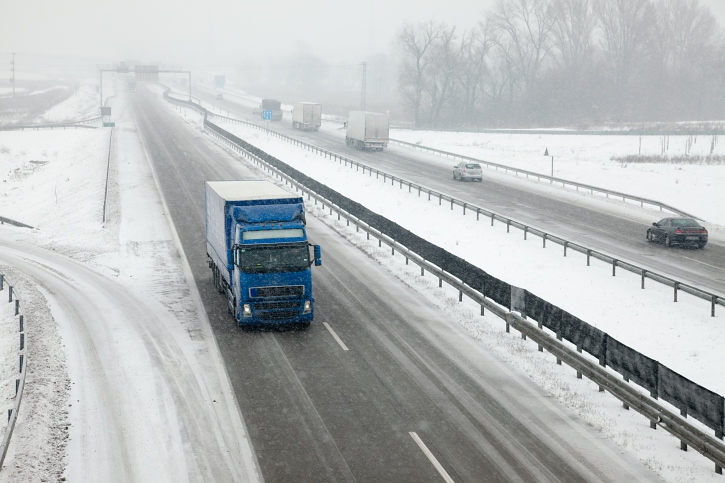
Winter is fast approaching. The nights are drawing in. Ice is creeping back on to our windshields. And it is something to think about for all motorists, but it can be a particular worrisome for truck drivers. Reliant on keeping moving, truck drivers don’t have the option of alternative transport (trains, buses etc.) that other motorists have. So with the idea of keeping the UK trucking industry safely on the move, here is a wide reaching set of tips that can be implemented in the months ahead.
Before you set off
Supplies
Though we hope the tips on the list will help prevent an accident or a snow-in all together, it’s still very important to prepare for the worst. Inside your cab, you should have:
- Blankets and warm clothes
- Food and thermoses of water
- Torches and a lighter
- A mobile phone with charger
- A bag of sand/salt
- Traction pads or tire chains
- Jumper cables
- A windscreen scraper and De-Icer
First aid kit
It may take up a fair amount of space, and you may never use it, but if a situation arises where some or all of it will become useful, you’ll be grateful for your prep work.
Treat your fuel
Diesel has a tendency to become gloopy in cold weather, resembling gel more so than fuel. Treat it with anti-gel products to ensure it doesn’t let you down when you need it most.
Equip Snow Tires
While this may seem like a big expense for something you will only be using for a few months, but they are the best thing you can do to prepare for winter. The tires are manufactured to maximise grip, aided by small spikes on each tire. Plus they should be good to use again the following year, and maybe a few more years after that.
Ice on the windscreen = Ice on the road
An iced over windscreen is annoying, but it can also act as a good indicator of the road quality. If ice is present, that means that at some point since you last drove, the temperature dropped low enough to freeze water. While it doesn’t guarantee that the roads will be icy, as it may have melted away in the mean time, it’s an early heads up to be cautious.
Watch the Temperature
Water freezes at 0°C, so if temperatures are hovering around this number, be prepared for ice. Check the overnight temperatures too, to see if conditions were sub-zero at any point. The road tends to be warmer than the air above it, so even a 0°C temperature won’t guarantee ice, but the further south of that number the temperature drops, the more the chances of ice forming increases.
Listen to the radio
A general tip for any point in the journey, radio stations tend to up the frequency of their traffic reports when the cold weather arrives. These bulletins can inform you of any dangerous roads to avoid, or inform you if traffic is at a standstill, meaning you can make an alternative plan without getting stuck on the roads.
During your journey
Maintain a Constant Speed
Driving slower than usual should go without saying in Winter weather. But you should also take into account how your decisions as a bigger vehicle will affect other motorists as well as yourself. Be very deliberate with your speed – avoid sudden breaking or harsh acceleration. Keeping your actions obvious will allow those around you to do something similar, minimising the risk of a collision.
Leave your headlights on
The second most prominent problem in icy or snowy conditions, behind stability, is visibility. Turning your headlights on whenever you are on the road (and even when you are off it) will greatly improve your visibility, and further reduce the chances of being driven into by a driver who didn’t know where you were.
Watch for spray
This can be tricky to judge. If another truck is kicking up a lot of spray, the road is wet and the possibility of ice is high if the temperature is hovering around 0°C. If it later kicks up a smaller amount of spray, it could mean one of two things – 1) They road is drying out; 2) The water is starting to freeze. Again, referencing a temperature gauge will give you the best idea of which outcome is happening, but remaining vigilant of the road surface also helps. Seeing the shiny flecks of ice forming will indicate that the road is indeed freezing.
Talk to other truckers
There is no shame in asking for assistance in these situations. Keeping up to date with road conditions further down the road, via other truckers, can help create a better overall picture of the conditions you are about to tackle. In turn, you can inform those behind you what they are driving into.
When it gets really tough
Zero visibility
If conditions become so severe that you can’t see more than 5ft in front of you, don’t panic, and act logically. First of all, reduce your speed to a crawl, to minimise your chance of ramming into something because you didn’t see it in time to slow down.
Next, think about stopping. You don’t want to be stopping on the road, as if you can’t see, neither can anybody else. Look for the safest place to park on the side of the road, well out of the flow of traffic, and ease your speed gradually to a stop. Leave your lights on throughout.
Longer duration parking
If you know further travel isn’t a possibility, and you can safely make it off of the motorway, there are certain parking places to target. After the motorway, exit ramps tend to be the next things to be cleared. This may shrink the time period you will be stationary for, but could cause traffic problems if you take up a lot of space. Instead, look for constant use car parks, such as those in 24 hour supermarkets, petrol stations or hotels. Isolated car parks are more likely to build up with snow, so avoid them whenever possible.
When it seems safe to move off, run through the pre-trip checklist again (temperature, radio etc.) to make sure you aren’t likely to be stopping again any time soon.